Skip to content
Built for catchers that want more

Our philosophy. Your development.

Train with purpose. Develop with a system.

We coach the athlete behind the gear, identify what is limiting performance, and build a clear plan that transfers to competition.

Our training philosophy

Train the athlete behind the gear.

The missed play is only part of the story. We look at movement, technique, decisions, confidence, preparation, and the demands of the game before deciding what to train.

Coach the catcher, not the drill

Every athlete moves, learns, competes, and responds differently. The training plan should reflect that.

Build skills that transfer

A drill only matters when the catcher can use the movement, decision, or adjustment in competition.

Create independent players

Catchers should understand what they are working on, why it matters, and how to make adjustments.

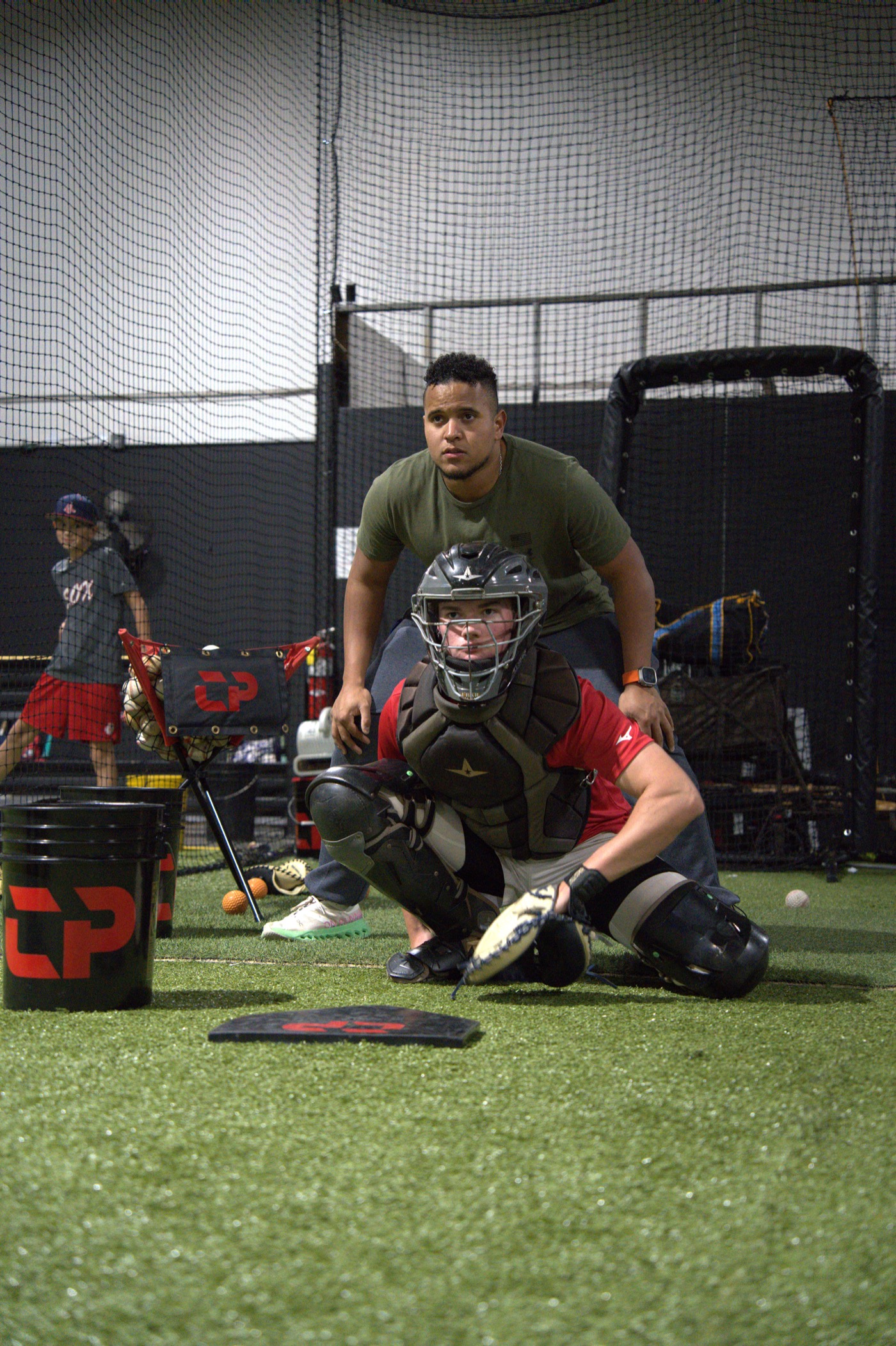
Coach Andrés guiding a catcher through positioning during a CATCHPRO ACADEMY training session
Individual coaching. Clear purpose. Game-ready development.

The CATCHPRO development system

Evaluate. Prioritize. Develop. Measure.

Every training plan follows the same clear process while adapting to the catcher’s level, movement, season, needs, and goals.

01

Evaluate

Watch the skill, movement, decisions, confidence, and current game demands.

02

Prioritize

Choose the highest-impact need instead of changing everything at once.

03

Develop

Build the skill with clear progressions, game speed, technology, and honest feedback.

04

Measure

Retest, review video and results, adjust the plan, and keep moving forward.

Start with an evaluation

One complete player

Skills. Movement. Strength. Game knowledge. Leadership. Confidence.

These parts work together. The plan shows the player how each part helps the others.

Ten parts that work together

The full catcher training plan

Open each part to see what we check, what we train, and how it helps in a game.

ReceivingGive the pitcher a steady target, catch the ball cleanly, and be ready for the next play.

Why this matters

Good timing and body control help a catcher handle more pitches and move quickly after the catch.

What we check

  • Set-up
  • Glove position
  • Timing
  • Body control
  • Reading the pitch

What we train

  • Receiving positions
  • Glove movement
  • Timing for each pitch location
  • Quiet body control

How it helps in games

Better receiving gives the pitcher a clear target and helps the catcher get ready to block or throw.

BlockingLearn how to move and keep hard pitches in front.

Why this matters

More reps alone may not fix a block. Hip and ankle movement, direction, speed, recovery, and confidence all matter.

What we check

  • Starting position
  • First move
  • Hip and ankle movement
  • Direction
  • Getting back up

What we train

  • Body movement
  • Blocking angles
  • Glove and body position
  • Recovery footwork
  • Reading the pitch

How it helps in games

Good blocking keeps runners from taking free bases and helps pitchers trust pitches in the dirt.

ThrowingPut the catch, transfer, feet, arm, and direction together for a clean throw.

Why this matters

A good throw needs more than a strong arm. The hands, feet, body, and arm must work together.

What we check

  • Ball transfer
  • Footwork
  • Arm movement
  • Order of movement
  • Direction

What we train

  • Transfers
  • Catcher footwork
  • Arm path
  • Full throws
  • Accurate game-speed throws

How it helps in games

Clean movement can lead to faster, more accurate throws from different pitch locations.

Mobility and MovementHelp the catcher reach and control the positions used behind the plate.

Why this matters

A coaching tip cannot fix a position the player cannot reach. Catchers need movement, balance, and body control.

What we check

  • Hip movement
  • Ankle movement
  • Balance
  • How the body moves
  • Control in catching positions

What we train

  • Active warm-ups
  • Catcher movement
  • Moving between positions
  • Side-to-side movement
  • Body control

How it helps in games

Better movement helps with low pitches, side blocks, transfers, throws, and long games.

Strength and ExplosivenessBuild the strength, balance, and speed catchers need.

Why this matters

Catchers move from low positions, hit the ground, change direction, and throw. Their strength work should help with those actions.

What we check

  • Strength in catching positions
  • Leg power
  • Balance
  • Movement speed
  • Ability to repeat good reps

What we train

  • Catcher strength
  • Fast movement
  • Strong positions
  • Game-speed drills
  • Safe work levels

How it helps in games

More strength and speed can help with quick reactions, strong positions, better throws, and late innings.

HittingHelp the catcher become a better hitter too.

Why this matters

Catchers also need to help their team at the plate. Hitting work should fit around the hard work of catching.

What we check

  • Body movement
  • Pitch choices
  • Timing
  • Contact
  • Main needs

What we train

  • Basic movement
  • A clean swing
  • Strong intent
  • At-bat plan
  • Personal changes when needed

How it helps in games

A catcher who plays the position well and can hit gives the team more ways to use them.

Game IntelligenceKnow the game, think ahead, and make good choices between pitches.

Why this matters

The catcher sees the whole field and handles every pitch. Skills work better when the player also knows what is happening in the game.

What we check

  • Knowing the situation
  • Reading pitches
  • Choices
  • Preparation
  • Response to the game

What we train

  • Game situations
  • Reading pitch location
  • Choosing what matters first
  • Before-pitch routines
  • Review after practice

How it helps in games

Better game knowledge helps the catcher stay ready, support the pitcher, and make good choices under pressure.

Leadership and CommunicationSpeak clearly and be a steady teammate for pitchers, coaches, and fielders.

Why this matters

Leadership means clear information, good effort, owning mistakes, and staying calm.

What we check

  • Clear voice
  • Body language
  • Talking with the pitcher
  • Owning actions
  • Response after mistakes

What we train

  • Clear communication
  • Between-pitch habits
  • Leadership practice
  • Helpful feedback
  • Staying calm

How it helps in games

Clear communication helps the defense stay ready and builds trust with pitchers when innings get hard.

Mental SkillsBuild simple habits for confidence, focus, and the next pitch.

Why this matters

Catcher mistakes are easy to see. Players need a way to learn from one pitch and then move on.

What we check

  • Confidence
  • Focus
  • Response to mistakes
  • Practice effort
  • Ability to make changes

What we train

  • Reset habits
  • Small goals
  • Focused reps
  • Knowing your habits
  • Pressure drills

How it helps in games

Strong mental habits help the catcher stay in the moment, lead, and adjust when the game changes.

Recovery and Arm CareWarm up, track throwing, recover well, and speak up about pain.

Why this matters

Catchers throw, squat, hit the ground, and move hard many times. Rest and recovery are part of good training.

What we check

  • Number of throws
  • Readiness to move
  • Tiredness
  • Recovery habits
  • Any pain or discomfort

What we train

  • Active warm-ups
  • Throwing warm-up
  • Tracking work
  • Recovery habits
  • Arm care that fits the player’s age

How it helps in games

Good warm-ups and recovery help players stay ready. Pain means stop and get medical help. Do not train through it.

Built around your level

One system. Your development plan.

Your experience, movement, season, confidence, and goals shape the plan. A developing catcher building body control needs different work from a varsity or college athlete preparing for the next level.

Compare training choices

“Every catcher is different. Each training plan should be different too.”

CATCHPRO ACADEMY approach

Start with a clear plan

Train the whole catcher, not just one drill.

Start with a session built around your game and the level you are pursuing.